
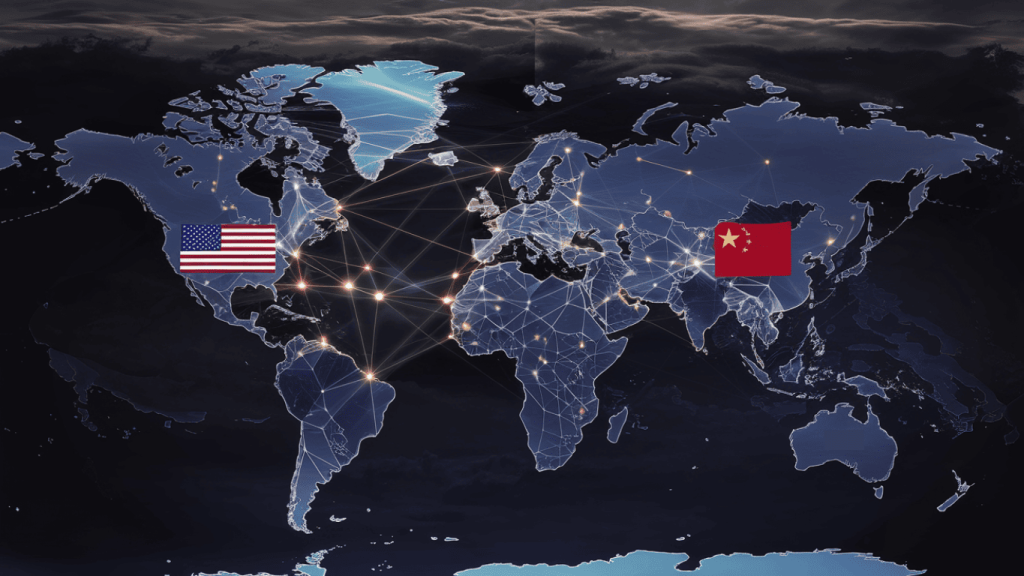
In today’s tech-driven world, semiconductors are the invisible workhorses behind everything from our everyday smartphones to the advanced systems that power modern militaries. However, the escalating geopolitical tensions between the United States and China are casting a long shadow over this critical industry. As these two superpowers vie for technological dominance, the global semiconductor supply chain is experiencing significant disruptions, with potential ripple effects that could lead to higher prices for electronic products worldwide. This article explores the current landscape, the impacts on the semiconductor supply chain, and the broader economic implications of this geopolitical tussle.
The U.S.-China Trade Tensions
The trade war between the U.S. and China, which began in 2018, has seen numerous tariffs and sanctions imposed by both sides. The semiconductor industry, critical for everything from smartphones to advanced military systems, has been a focal point of these tensions. The U.S. has implemented export controls on semiconductor technology to China, citing national security concerns. In response, China has accelerated its efforts to achieve self-sufficiency in semiconductor manufacturing.
Impact on the Semiconductor Supply Chain
1. Supply Chain Disruptions
The imposition of tariffs and export controls has disrupted the intricate global supply chains that the semiconductor industry relies on. Companies are facing delays and increased costs as they navigate these new trade barriers.
2. Increased Production Costs
With the U.S. restricting the export of advanced semiconductor manufacturing equipment to China, Chinese companies are struggling to maintain their production capabilities. This has led to increased costs as they seek alternative suppliers or invest in developing their own technologies.
3. Shift in Manufacturing Hubs
To mitigate risks, many semiconductor companies are diversifying their manufacturing bases. Countries like Vietnam, India, and Mexico are emerging as alternative hubs for semiconductor production. However, this shift comes with its own set of challenges, including the need for significant infrastructure investments and workforce training.
4. Price Hikes for Electronics
The increased costs and supply chain disruptions are likely to be passed on to consumers. Electronics manufacturers, facing higher component prices, may increase the prices of their products. This could affect a wide range of consumer electronics, from smartphones to laptops and home appliances.
Recent Developments
1. U.S. Tightens Export Restrictions
In December 2024, the U.S. expanded its export controls, blacklisting 140 Chinese companies by adding them to its Entity List. This move aims to restrict China’s access to advanced semiconductor manufacturing equipment and AI technologies.
2. China’s Retaliation
In response, China has banned the export of critical minerals such as gallium, germanium, and other critical minerals to the U.S. These materials are essential for producing advanced semiconductors and other high-tech products. The ban is expected to have significant implications for U.S. industries that rely on these materials.
Broader Economic Implications
The semiconductor industry is not just a technological battleground but also a critical economic one. The ongoing trade tensions could have several broader implications:
- Innovation Slowdown: The semiconductor industry thrives on rapid innovation. Trade restrictions and supply chain disruptions could slow down the pace of technological advancements, affecting industries that rely on cutting-edge semiconductor technology.
- Global Economic Uncertainty: The semiconductor industry is deeply interconnected with the global economy. Prolonged trade tensions could lead to economic uncertainty, affecting investment decisions and economic growth worldwide.
- Strategic Alliances and Partnerships: In response to the geopolitical landscape, countries and companies are forming new alliances and partnerships. For instance, the U.S. is strengthening its ties with allies like Japan, South Korea, and Taiwan to secure its semiconductor supply chain.
Key Statistics
- Global Semiconductor Production: South Korea, Taiwan, and China collectively account for approximately 70% of global semiconductor production.
- U.S.-China Trade Figures: In 2023, China was the fourth-largest U.S. goods trading partner, with total trade amounting to $575 billion. U.S. exports to China were valued at $147.8 billion, while imports from China stood at $427.2 billion.
- Investment Shifts: In 2023, U.S. foreign direct investment in China stood at approximately $126 billion, reflecting a steady presence despite geopolitical tensions. However, private equity investments from the U.S. have plummeted—from a peak of $140 billion in 2019 to just $4 billion in 2023—highlighting mounting concerns over political and regulatory risks. Meanwhile, Chinese FDI in the U.S., valued at $28 billion, underscores the increasingly constrained economic ties between the two nations.
- Impact on Electronics Prices: The ongoing trade tensions and supply chain disruptions are expected to lead to price increases for consumer electronics, affecting a wide range of products from smartphones to home appliances.
Conclusion
Geopolitical tensions between the U.S. and China are dramatically redefining the semiconductor industry. As the two superpowers navigate this high-stakes rivalry, the global semiconductor supply chain is caught in a state of constant uncertainty. Companies and consumers alike must brace for potential price hikes and disruptions. However, this period of uncertainty also presents opportunities for innovation and strategic realignment, which could ultimately lead to a more resilient and diversified global semiconductor industry.