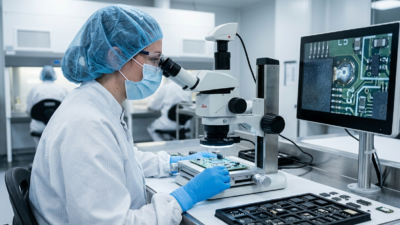
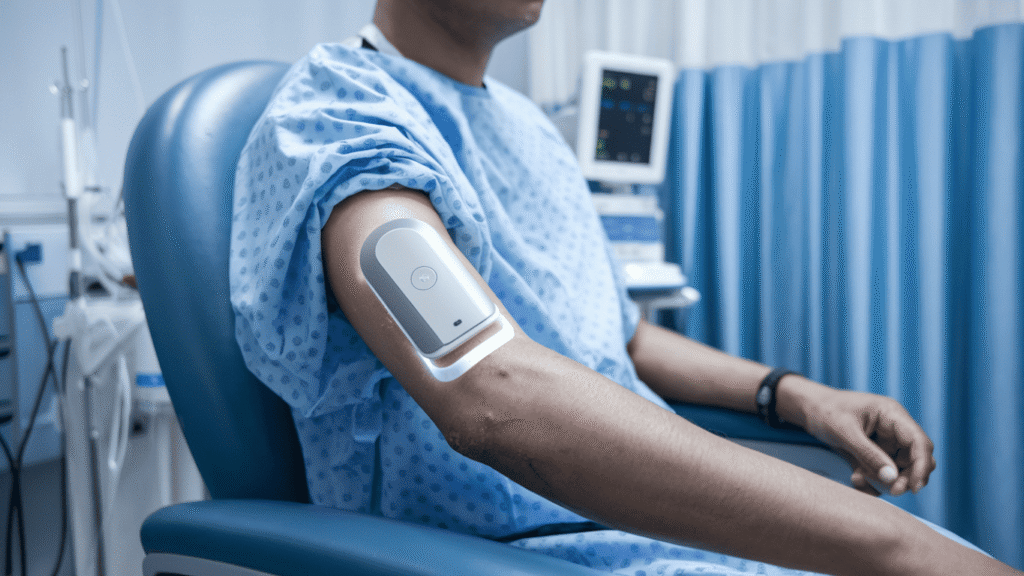
Bioelectronics is at the forefront of merging biology with technology, and the latest breakthrough in hydrogel semiconductors is set to revolutionize the field. This new material combines the flexibility and biocompatibility of hydrogels with the powerful semiconductive properties needed for advanced medical devices.
Market Growth and Statistics
The global bioelectronics market is experiencing significant growth. In 2024, the market was valued at approximately $15.45 billion and is projected to reach $32.9 billion by 2030, growing at a compound annual growth rate (CAGR) of 13.4%. This rapid expansion is driven by advancements in medical technology, increasing demand for minimally invasive procedures, and the integration of AI and IoT in healthcare.
Breakthrough in Hydrogel Semiconductors
Researchers at the University of Chicago have developed a hydrogel semiconductor that is both soft and stretchable, making it ideal for interfacing with living tissue. This new material retains the semiconductive ability needed to transmit information between living tissue and machines while being as soft and water-loving as the tissue itself.
Applications in Medical Devices
- Implantable Devices: The hydrogel semiconductor can be used in pacemakers, biosensors, and drug delivery devices, reducing immune responses and inflammation typically triggered by rigid materials.
- Non-Surgical Applications: Potential uses include better readings of the skin and improved wound care, thanks to the material’s soft mechanical properties and high hydration levels.
Comparison with Traditional Semiconductors
- Flexibility and Biocompatibility: Traditional semiconductors are rigid, brittle, and repel water, making them unsuitable for direct interfacing with biological tissues. In contrast, hydrogel semiconductors are soft, stretchable, and hydrophilic, closely mimicking the properties of living tissues.
- Electrical Performance: While traditional semiconductors like silicon offer high charge carrier mobility (around 1000 cm²/V·s), hydrogel semiconductors have lower mobility (1.4 cm²/V·s) but are sufficient for many biointerfaced applications. The hydrogel’s porous structure also enhances biosensing capabilities and allows efficient diffusion of biomolecules.
Challenges in Hydrogel Semiconductors
Despite the promising potential, there are several challenges in developing hydrogel semiconductors:
- Material Integration: Traditional semiconductors are rigid and water-hating, making it difficult to integrate them with hydrogels, which are soft and water-loving.
- Manufacturing Process: Creating a hydrogel semiconductor involves a complex solvent exchange process to ensure the material retains both its semiconductive and hydrogel properties.
- Stability and Longevity: Ensuring the long-term stability and performance of hydrogel semiconductors when implanted in the human body remains a significant challenge.
Ongoing Research and Industry Efforts
- University of Chicago: Researchers at the University of Chicago’s Pritzker School of Molecular Engineering have patented and are commercializing their hydrogel semiconductor through the Polsky Center for Entrepreneurship and Innovation.
- Collaborative Projects: Various institutions and companies are exploring the use of hydrogel semiconductors in brain-machine interfaces, biosensors, and pacemakers.
Impact on Patient Care
The development of hydrogel semiconductors marks a significant milestone in bioelectronics, offering a promising future for medical technology:
- Enhanced Biocompatibility: The hydrogel’s tissue-like mechanical properties allow it to deform together with the tissue, forming a very intimate bio-interface, which reduces immune responses and inflammation.
- Improved Biosensing and Therapeutic Functions: The porous nature of hydrogels enables efficient diffusion of nutrients and chemicals, improving biosensing response and therapeutic functions.
- Better Patient Outcomes: By providing a more biocompatible and efficient interface between medical devices and living tissue, hydrogel semiconductors can enhance the performance of implantable devices, leading to better patient outcomes.
Latest Trends in Bioelectronics
- AI and Machine Learning Integration: AI is increasingly being used to optimize bioelectronic device performance and personalize patient care.
- Wearable Biosensors: Advances in wearable technology are enabling continuous health monitoring and early disease detection.
- 3D Bioprinting: The use of 3D bioprinting to create customized bioelectronic devices tailored to individual patient needs.
Conclusion
The development of hydrogel semiconductors represents a significant advancement in bioelectronics, offering new possibilities for medical devices that are both effective and biocompatible. As the bioelectronics market continues to grow, innovations like hydrogel semiconductors will play a crucial role in shaping the future of healthcare.
Vyrian supports these evolving industries by providing high-quality components for cutting-edge medical devices, defense, aerospace, and military technologies, advancing your projects.
FAQ Section
1. What are the key benefits of hydrogel semiconductors over traditional semiconductors?
Hydrogel semiconductors offer superior biocompatibility and flexibility compared to traditional semiconductors. They are soft, stretchable, and hydrophilic, making them ideal for interfacing with biological tissues without causing immune responses or inflammation
2. How do hydrogel semiconductors enhance biosensing capabilities?
The porous structure of hydrogel semiconductors allows efficient diffusion of biomolecules, enhancing biosensing response and sensitivity. This makes them highly effective for applications in medical diagnostics and monitoring.
3. What are the main challenges in developing hydrogel semiconductors?
Key challenges include integrating semiconductive properties with the hydrogel matrix, ensuring long-term stability and performance in the body, and developing efficient manufacturing processes
4. How is AI being integrated into bioelectronics?
AI optimizes the performance of bioelectronic devices, personalizes patient care, and enhances diagnostic accuracy. This includes applications in wearable biosensors and implantable devices.
5. What are some emerging applications of bioelectronics?
Emerging applications include wearable biosensors for continuous health monitoring, gene editing technologies for treating genetic disorders, and 3D bioprinting for creating customized bioelectronic devices.
6. How does the bioelectronics market look for the future?
The bioelectronics market will grow significantly, reaching $32.9 billion by 2030 with a CAGR of 13.4%. Advancements in technology, demand for minimally invasive procedures, and AI integration in healthcare drive the bioelectronics market’s growth.