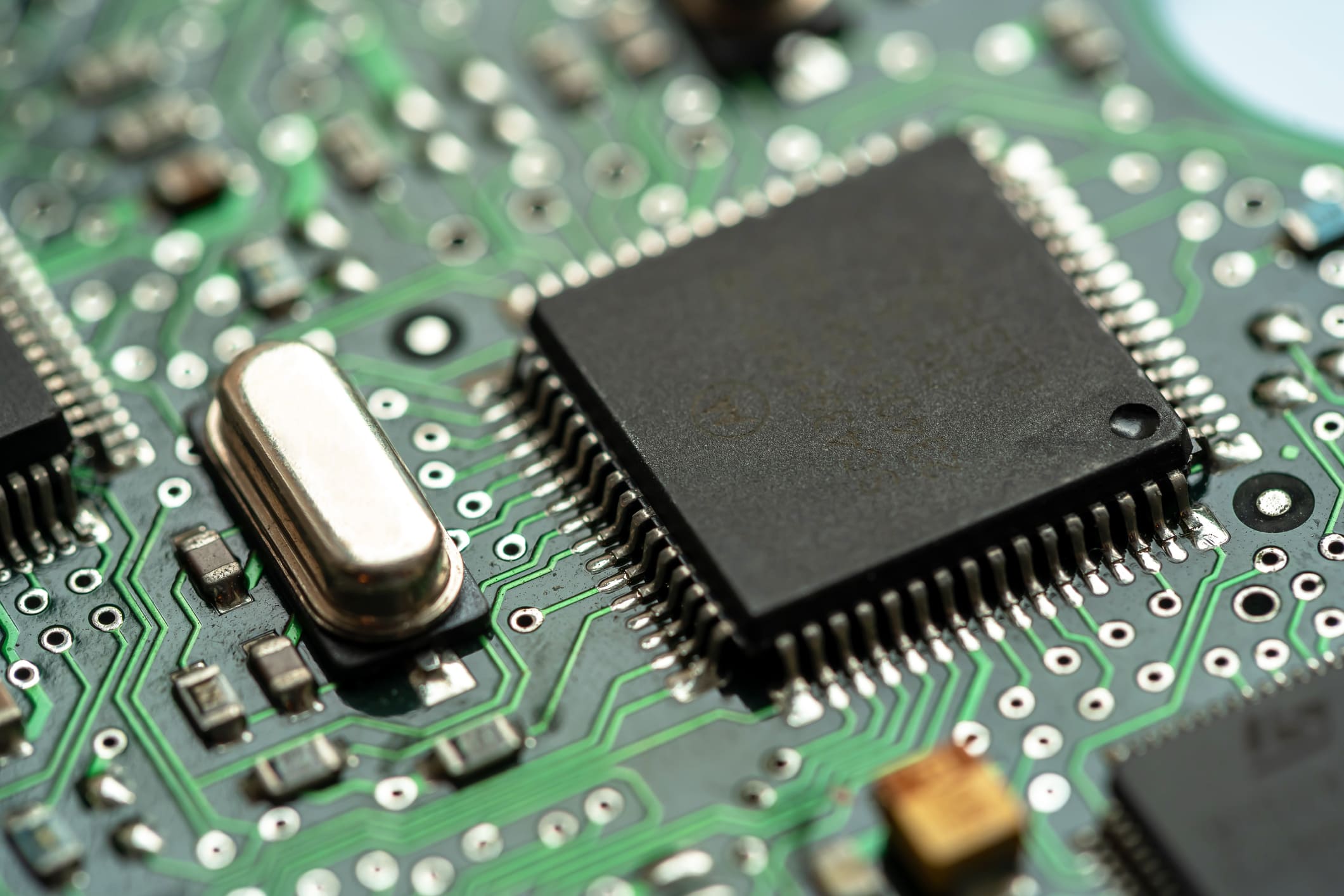
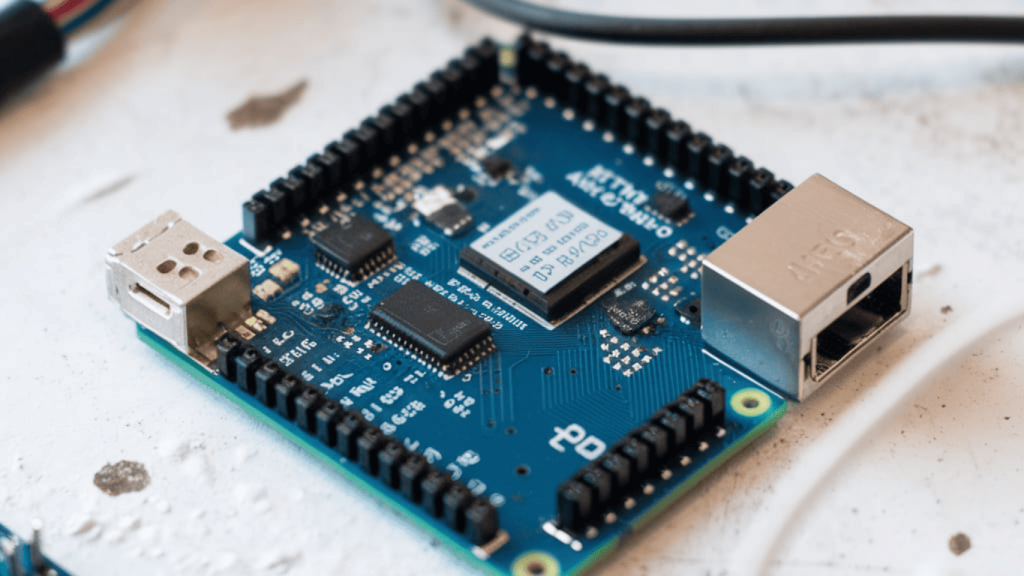
The ATMega328P microcontroller is one of the most popular and widely used MCUs in the field of embedded systems. Its versatility, ease of use, and support for various development environments have made it a top choice for numerous applications, from Arduino boards to industrial automation and consumer electronics.
If you’ve ever worked with an Arduino UNO board or a similar development platform, chances are you’ve already encountered this versatile MCU. Its popularity stems not only from its robust feature set and reliability but also from its seamless integration into a variety of projects, both hobbyist and professional. As a trusted electronic components distributor, Vyrian supports engineers and innovators by providing high-quality microcontrollers like the ATMega328P to help turn ideas into reality.
In this comprehensive guide, we’ll walk you through the ATMega328P pinout configuration, features, and real-world applications. Whether you’re a seasoned engineer or just starting out in embedded systems, we’ve got you covered.

Why the ATMega328P Stands Out
The ATMega328P is an 8-bit AVR microcontroller known for its balanced combination of performance, power efficiency, and ease of use. It features a wide range of peripherals and interfaces, making it suitable for everything from motor control and data acquisition to consumer electronics and prototyping.
Key Highlights:
- Robust Ecosystem: The ATMega328P is at the heart of the Arduino UNO, one of the most popular development boards in the world. This means you get access to an extensive library of resources, tutorials, and community support.
- Flexible Peripheral Integration: With multiple I/O pins, ADC channels, PWM outputs, and communication interfaces (SPI, I2C, USART), the ATMega328P is built to handle complex tasks with ease.
- Power Efficiency: Designed with low-power operation in mind, this microcontroller supports several power-saving modes, making it ideal for battery-operated and portable applications.
ATMega328P Pinout: Understanding Its Configuration
To make the most out of the ATMega328P in your designs, understanding its pin configuration is essential.
The ATMega328P is available in 28-pin DIP and 32-pin TQFP packages. The 28-pin DIP is commonly used in educational and hobbyist projects due to its compatibility with breadboards and ease of handling, while the 32-pin TQFP is preferred for industrial applications and compact PCB designs due to its smaller footprint and surface-mount technology.
Below is a detailed description of each pin:
| Pin Number | Pin Name | Primary Function | Secondary Function |
| 1 | PC6 (RESET) | Reset Input | Digital I/O |
| 2 | PD0 (RXD) | USART0 Receive Pin | Digital I/O |
| 3 | PD1 (TXD) | USART0 Transmit Pin | Digital I/O |
| 4 | PD2 (INT0) | External Interrupt 0 | Digital I/O |
| 5 | PD3 (INT1) | External Interrupt 1 | PWM Output |
| 6 | PD4 (XCK/T0) | Timer/Counter 0 External Clock | Digital I/O |
| 7 | VCC | Supply Voltage | – |
| 8 | GND | Ground | – |
| 9 | PB6 (XTAL1/TOSC1) | External Clock/Timer Oscillator | Digital I/O |
| 10 | PB7 (XTAL2/TOSC2) | External Clock/Timer Oscillator | Digital I/O |
| 11 | PD5 (T1) | Timer/Counter 1 Input | Digital I/O |
| 12 | PD6 (AIN0) | Analog Comparator Input 0 | PWM Output |
| 13 | PD7 (AIN1) | Analog Comparator Input 1 | Digital I/O |
| 14 | PB0 (ICP1) | Timer/Counter 1 Input Capture | Digital I/O |
| 15 | PB1 (OC1A) | PWM Output for Timer/Counter 1 | Digital I/O |
| 16 | PB2 (SS/OC1B) | SPI Slave Select, PWM Output | Digital I/O |
| 17 | PB3 (MOSI/OC2A) | SPI Master Out, Slave In | PWM Output |
| 18 | PB4 (MISO) | SPI Master In, Slave Out | Digital I/O |
| 19 | PB5 (SCK) | SPI Clock | Digital I/O |
| 20 | AVCC | Supply Voltage for ADC | – |
| 21 | AREF | Reference Voltage for ADC | – |
| 22 | GND | Ground | – |
| 23 | PC0 (ADC0) | Analog Input Channel 0 | Digital I/O |
| 24 | PC1 (ADC1) | Analog Input Channel 1 | Digital I/O |
| 25 | PC2 (ADC2) | Analog Input Channel 2 | Digital I/O |
| 26 | PC3 (ADC3) | Analog Input Channel 3 | Digital I/O |
| 27 | PC4 (ADC4/SDA) | Analog Input Channel 4, I2C Data | Digital I/O |
| 28 | PC5 (ADC5/SCL) | Analog Input Channel 5, I2C Clock | Digital I/O |
Technical Specifications & Features
The ATMega328P microcontroller is known for its balance of performance and efficiency. Below is a summary of its key technical specifications:
- Operating Voltage: 1.8V – 5.5V (Typically 5V for most applications, particularly in Arduino projects)
- CPU Speed: Up to 20 MHz
- Flash Memory: 32 KB
- SRAM: 2 KB
- EEPROM: 1 KB
- Number of I/O Pins: 23
- Analog-to-Digital Converter (ADC): 6 channels with 10-bit resolution
- PWM Channels: 6 (Pins 3, 5, 6, 9, 10, and 11)
- Timers/Counters: Three 8-bit and one 16-bit timer
- Communication Interfaces: USART, SPI, I2C (TWI)
- Power-Saving Modes: Idle, ADC Noise Reduction, Power-down, Power-save, Standby, and Extended Standby
Note: The ATMega328P operates within a voltage range of 1.8V to 5.5V. For most applications, especially in Arduino projects, it typically runs at 5V. This ensures maximum clock frequency and reliable performance. It’s important to note that while the ATMega328P can function at lower voltages, certain performance metrics, such as the maximum clock frequency, will be affected. Operating at 5V helps maintain optimal performance and stability.
Practical Applications of the ATMega328P
From basic LED blinking projects to complex sensor networks, the ATMega328P shines in a wide variety of applications. Here are a few common use cases where this microcontroller excels:
- Prototyping and Educational Projects: The ATMega328P’s ease of use and availability of resources make it a go-to choice for learning electronics and microcontroller programming.
- Smart Home Automation: With its ability to interface with multiple sensors and actuators, the ATMega328P is perfect for building smart home devices like thermostats, lighting systems, and security sensors.
- Robotics: The PWM channels and timers make it easy to control motor drivers, servos, and other actuators, making it an ideal MCU for building robotic systems.
- Portable Devices: Its power-saving modes and low voltage operation make the ATMega328P suitable for battery-powered and portable devices, such as fitness trackers and remote sensors.
The ATMega328P datasheets offer a complete view of these specifications, along with electrical characteristics, pin configurations, and recommended operating conditions, making them an essential reference for any designer working with this microcontroller.
Programming and Development
The ATMega328P can be programmed using various development environments, including Microchip Studio (formerly Atmel Studio) and Arduino IDE. Other popular environments like PlatformIO and MPLAB X IDE are also widely used for programming AVR microcontrollers. Arduino IDE is particularly user-friendly for beginners.
Here’s a step-by-step guide on how to get started with programming the ATMega328P using the Arduino IDE:
1. Setting Up the Arduino IDE:
- Download/install the Arduino IDE from the official website.
- Connect the ATMega328P to an Arduino UNO board or use an ISP programmer to directly connect it to your PC.
- Select the correct microcontroller model (ATMega328P) and the appropriate port in the Arduino IDE settings.
2. Writing and Uploading a Program:
- Write a simple program to blink an LED. For example, the code below will blink an LED connected to pin 13 every second:

- Click on the ‘Upload’ button in the Arduino IDE to upload the program to the ATMega328P.
3. Using Communication Interfaces for Debugging:
- Utilize the USART interface for serial communication and debugging.
- For faster communication, use SPI or I2C interfaces to connect with other modules or microcontrollers.
By referencing the ATMega328P datasheet, you can ensure that the microcontroller is correctly configured and that you are making use of its full potential.
Comparative Analysis with Similar Microcontrollers
When compared to other microcontrollers in the AVR family, such as the ATMega16 and ATMega32, the ATMega328P stands out due to its balanced memory capacity and pin configuration, making it ideal for a wide range of applications.
| Microcontroller | Flash Memory | SRAM | EEPROM | Operating Voltage | Use Case |
| ATMega16 | 16 KB | 1 KB | 512 Bytes | 2.7V – 5.5V | Basic control applications |
| ATMega32 | 32 KB | 2 KB | 1 KB | 2.7V – 5.5V | Medium complexity applications |
| ATMega328P | 32 KB | 2 KB | 1 KB | 1.8V – 5.5V | Wide range of embedded projects |
1. ATMega16 vs. ATMega328P
The ATMega16 is an 8-bit microcontroller with 16 KB of Flash memory and 1 KB of SRAM. Its smaller memory capacity makes it less suitable for applications requiring extensive program storage or larger data handling capabilities. The ATMega328P, with 32 KB of Flash memory and 2 KB of SRAM, offers double the program space and better data handling capabilities.
Application Suitability: Basic control systems and small automation projects often rely on the ATMega16 due to its simpler architecture and lower memory capacity. Educational settings also utilize it widely for teaching microcontroller programming, as its straightforward design helps students grasp fundamental concepts. In contrast, the ATMega328P supports more complex applications, such as Arduino-based projects, sensor data acquisition, and prototyping, thanks to its enhanced memory, integrated peripherals, and extensive ecosystem support.
2. ATMega32 vs. ATMega328P
The ATMega32 offers the same Flash memory (32 KB) as the ATMega328P but in a larger 40-pin package, providing additional I/O pins that can be beneficial for applications requiring more peripherals. However, its larger footprint and higher pin count make it less compact and less suitable for space-constrained designs. The ATMega328P, on the other hand, offers a smaller 28-pin package and is more power-efficient, making it a preferred choice for portable and battery-powered devices.
Application Suitability: Medium-complexity applications, such as industrial systems and control panels, generally use the ATMega32, benefiting from its additional I/O pins. Its broader I/O capabilities make it ideal for projects that require interfacing with multiple sensors or external devices. However, for portable devices and educational projects, the ATMega328P’s compact size and power-saving features provide a more suitable option.
ATMega328P Applications & Use Cases
The ATMega328P demonstrates its versatility by powering a variety of embedded systems and projects. Some common applications include:
- Arduino Boards: The ATMega328P powers the Arduino UNO, providing an easy-to-use platform for beginners and professionals.
- Motor Control: Its PWM channels control the speed and direction of DC and servo motors in various robotic applications.
- Sensor Data Acquisition: The ADC channels allow it to interface with analog sensors for real-time data collection and processing.
- Home Automation Systems: Its multiple communication interfaces make it suitable for integrating with various smart home devices.
Advantages and Limitations
Advantages:
- Cost-Effective: Low cost compared to other microcontrollers with similar features.
- Broad Community Support: Extensive resources, libraries, and tutorials available online.
- Ease of Use: Supported by multiple development environments and tools, simplifying the programming process.
Limitations:
- Limited Processing Power: Not suitable for applications requiring high-speed data processing or complex algorithms.
- Lack of JTAG Interface: Debugging can be more challenging without a JTAG interface, making it necessary to use other methods like serial debugging.
Conclusion
The ATMega328P is a versatile microcontroller that continues to be a favorite among engineers and designers for its balanced performance, ease of use, and extensive support. Whether you’re building a new prototype or upgrading an existing system, this microcontroller offers the flexibility and reliability needed to bring your ideas to life.
Explore Vyrian’s extensive catalog of microcontrollers, or get in touch with our team to learn how we can support your project with top-quality electronic components.