
TL;DR
- A form-fit-function (FFF) replacement swaps an obsolete part for one that matches its physical shape, its interface and its performance, so the system works with no redesign.
- Check all three: form (package, dimensions, materials), fit (pinout, footprint, mounting) and function (electrical and environmental performance).
- Defense programs also need the paperwork: drawing or specification approval, test evidence and traceability for every lot.
- Rank options from the original part first, then alternates, substitutes, aftermarket and emulated parts.
- Use the checklist in this guide before you send an FFF part to engineering for sign-off.
- Request a Quote
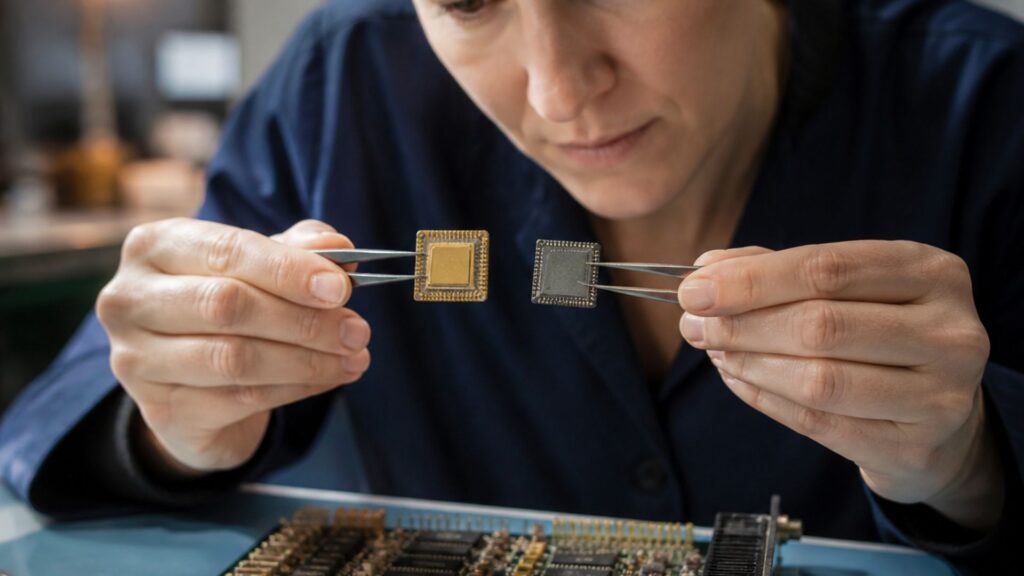
Form fit function replacement defense electronics work begins when a part on an approved drawing goes obsolete and the program cannot afford a board redesign. The buyer needs a part that drops into the same footprint, talks to the same circuit and survives the same environment. Engineering needs proof. The customer may need to approve the change. This guide gives procurement managers a practical checklist for finding and qualifying an FFF part, explains which questions to ask at each stage, and shows where an independent distributor can help when the original part is still the best answer.
What Form Fit Function Replacement Defense Electronics Teams Need to Match
Form, fit and function is a term from military logistics, where it describes interchangeable parts. Two parts that share all three can be swapped for each other. Each word covers a different set of checks:
- Form is the physical part: package type, dimensions, weight, materials and lead finish.
- Fit is how the part connects: pinout, footprint, mounting holes, connector mating and thermal contact.
- Function is what the part does: electrical ratings, timing, logic levels, power draw and performance across temperature, shock and vibration.
A part that matches two out of three is not an FFF part. A replacement with the right pinout but a different lead finish can fail a tin whisker requirement. A replacement with the right package but wider timing margins can break a circuit that was tuned to the original.
The Procurement Manager’s FFF Checklist
Use this checklist before you send an FFF substitute defense component to engineering for review. It saves a round trip when something obvious is missing.
Form checks
- Same package type and pin count.
- Body dimensions and seated height within the drawing tolerance.
- Lead finish matches the requirement, for example tin-lead where pure tin is prohibited.
- Package material suits the environment, for example ceramic hermetic where the original was hermetic.
Fit checks
- Pin-for-pin match, including no-connect and thermal pads.
- Same land pattern on the existing board.
- Same mounting, heat sinking and clearance to nearby parts.
Function checks
- Electrical parameters equal to or better than the original, with no parameter that could upset the circuit.
- Same or wider operating temperature range.
- Screening and quality level equal to the original grade.
- Same behavior at power-up, reset and fault conditions.
Paperwork checks
- Datasheets for both parts, with a side-by-side comparison of every parameter.
- Test data for the replacement lot.
- Certificate of conformance and traceability records.
- A note of whether the change needs customer or drawing approval.
Ranking Your Form Fit Function Replacement Defense Electronics Options
An obsolete military electronic part alternative can come from several places. Rank them by how little change they introduce.
- The original part from existing stock. No change at all. Look in the supply system, the prime contractor’s stores and the open market first.
- An alternate. The same specification from another qualified manufacturer. Usually the least engineering effort.
- An aftermarket part. Made by an authorized aftermarket manufacturer that took over the original design or die.
- A substitute. A different part that performs the same job but needs engineering review and testing.
- An emulated part. A new part built to match the old one using current technology. It can work well but takes time and money to qualify.
Redesign sits below all of these. A defense legacy component replacement that avoids redesign can save months of engineering and requalification.
Why the Original Part Is Often the Best FFF Answer
The cleanest form fit function replacement defense electronics programs can find is the original part itself. It needs no new datasheet comparison, no new qualification and usually no customer approval. The challenge is finding genuine stock after the manufacturer has stopped production.
That is where an independent distributor helps. Excess stock of discontinued parts sits with contract manufacturers and OEMs worldwide. A distributor that can find it, inspect it and test it gives the program time. That time can cover the remaining service life, or it can bridge the gap while an alternate is qualified. Even a small quantity of original parts can keep depot repairs moving while engineering works through a substitute, and it gives the test team a known-good reference to compare the substitute against. Defense rules in DFARS 252.246-7008 allow buying out-of-production parts from contractor-approved suppliers when the contractor uses inspection, testing and authentication. Our guide to sourcing MIL-SPEC components from independent distributors covers the supplier checks in detail.
Buyers can search components by category to check open-market stock, or browse our manufacturer list to see which brands we source.
How to Brief a Supplier on Form Fit Function Replacement Defense Electronics Requests
The quality of an FFF quote depends on the quality of the request. A vague RFQ gets a vague answer, and the buyer loses days going back and forth. Send these details with every request for form fit function replacement defense electronics parts:
- The full original part number, including any suffix that sets grade, package or lead finish.
- The drawing or specification callout, so the supplier knows which parameters are fixed.
- The quantity and the reason for it: a repair batch, a production lot or a lifetime buy.
- Whether alternates are acceptable, and which approvals they would need.
- The test level you expect, from visual and X-ray only to full electrical test.
- The documents you need, such as a certificate of conformance, test report and traceability records.
With this information, a supplier can search for the original part first and offer alternates only where they fit the rules. It also lets the supplier quote testing up front, so the lead time you see is the real one.
Good suppliers will push back when something does not add up. If a requested alternate has a narrower temperature range, or a lead finish that conflicts with the drawing, you want to hear it before the order rather than at receiving inspection. That feedback belongs in the form fit function replacement defense electronics review file, next to the datasheet comparison.
Keep a record of every quote, the options offered and the reasons for the final choice. Over time this becomes a library of approved answers. When the same part appears on another program, the buyer can start from a known-good source and a known-good test plan.
Managing Risk in Form Fit Function Replacement Defense Electronics Decisions
Every form fit function replacement defense electronics change carries some risk. The aim is to see it and record the decision.
- Counterfeit risk. Discontinued parts attract counterfeiters. Buy from certified sources and test every lot. Vyrian’s testing and certifications are listed on our Quality and Compliance page.
- Hidden parameter risk. Datasheets do not show everything. A replacement can meet every listed number and still behave differently in the circuit. Bench-test it in the real assembly where you can.
- Configuration risk. A change that is invisible to the user can still need a drawing update. Ask configuration management early.
- Supply risk. A replacement that is itself near end of life only moves the problem. Check the lifecycle status of every candidate.
Lifecycle data for most parts is available from manufacturers and obsolescence tools, so this check takes minutes and can save a second search a year later.
Record the comparison, the test results and the approval in one file. That file saves the next buyer who meets the same part from repeating the work.
Fitting FFF Into the Wider Obsolescence Plan
Form fit function replacement defense electronics is one resolution in a larger process. Programs that track part lifecycles find candidates before the shortage, when there is time to test them. Our guides on building a DMSMS management plan and last-time-buy strategy explain how FFF decisions sit alongside lifetime buys and redesign. To learn more about Vyrian, visit the Vyrian homepage.
“When a defense buyer asks us for an FFF replacement, the first thing we check is whether the original part still exists somewhere in the world. Often it does. Finding it, testing it and shipping it with the paperwork is usually faster than any substitute the engineers would need to qualify.”
Sath Sivasothy, VP of Sales, Vyrian
Conclusion
A form-fit-function replacement keeps a defense system in service without a board redesign, but only when form, fit and function all match and the evidence is on file. Work through the checklist before engineering review. Rank options from the original part down to emulation, and treat redesign as the last resort. Check every lot for authenticity, and record the decision so the next shortage starts with answers. Done this way, form fit function replacement defense electronics decisions protect both schedule and readiness.
Looking for the original part before you qualify a substitute? Request a quote and our team will check global stock and testing options within 24 hours.
About the Author
Sath Sivasothy is VP of Sales at Vyrian Inc., where he leads sourcing for defense, aerospace and industrial customers who need obsolete and hard-to-find electronic components. He helps program and procurement teams locate original parts and replacements for legacy systems. Connect on LinkedIn.
Frequently Asked Questions
What does form, fit and function mean?
Form is the physical part, fit is how it connects to the system, and function is what it does. A part that matches all three can replace another without changes to the system.
Does an FFF replacement need customer approval?
It depends on the contract and the drawing. Some form fit function replacement defense electronics changes need only internal engineering approval, and others need a drawing change or customer sign-off. Ask configuration management before you buy.
Is an alternate the same as a substitute?
No. An alternate meets the same specification from a different qualified manufacturer. A substitute performs the same job but differs enough that it needs engineering review and testing.
Can Vyrian find original parts for obsolete defense systems?
Yes. Vyrian sources discontinued parts from a global network and inspects and tests them before shipment, with documentation for every lot.