TL;DR
- Under the FDA’s QMSR, your purchasing controls follow ISO 13485:2016, so every electronics supplier needs a documented evaluation.
- Franchised distributors are low risk. Independent distributors fill gaps when parts are obsolete or on allocation, and need deeper checks.
- Verify five things: certifications, testing capability, traceability, handling controls and counterfeit reporting.
- Ask for evidence: certificates, sample test reports and a sample certificate of conformance.
- Re-evaluate suppliers on a schedule and after any quality escape.
- Request a Quote
Electronic component supplier qualification medical device teams can defend in an audit starts with one question: how do you know the chip on your board is what the label says? For franchised channels, the answer is the manufacturer’s own chain of custody. For any other source, you have to prove it yourself, through the supplier’s systems and your own incoming checks.
This guide gives procurement and supply chain leaders a practical checklist. It covers what regulators expect, how supplier types differ in risk, what evidence to request, and how to keep the file current after approval.
What Regulators Expect in Electronic Component Supplier Qualification Medical Device Files
Since February 2, 2026, the FDA’s Quality Management System Regulation (QMSR) has incorporated ISO 13485:2016 by reference. For purchasing, ISO 13485 asks manufacturers to set criteria for evaluating and selecting suppliers, base those criteria on the supplier’s ability to meet requirements and on the risk of the purchased product, monitor supplier performance, and keep records of the evaluation.
In plain terms, an auditor will want to see three things:
- Criteria. A written procedure that says how you rate suppliers and what risk level drives what checks.
- Evidence. A file for each supplier showing the evaluation was done against those criteria.
- Follow-through. Records of ongoing monitoring, such as on-time delivery, rejects and corrective actions.
Electronic components add a specific risk on top: counterfeit and substandard parts. A resistor from a franchised source and an obsolete microcontroller from the open market are both “purchased product,” but they carry very different risks. Your electronic component supplier qualification medical device procedure should treat them differently.
How Do Supplier Types Compare on Risk?
Most medtech buyers deal with four kinds of sources. Here is how they compare:
| Supplier type | Typical use | Main risk | Qualification depth |
|---|---|---|---|
| Component manufacturer | High-volume active parts | Allocation, end-of-life notices | Standard |
| Franchised (authorized) distributor | Most production buys | Stock-outs on older parts | Standard |
| Independent distributor | Obsolete, allocated or hard-to-find parts | Counterfeit or mishandled stock | Enhanced: testing, traceability, certifications |
| Unvetted broker or marketplace seller | Emergency buys | High counterfeit risk, little documentation | Avoid for medical builds |
Independent distributors are a normal part of the medtech supply chain, because devices stay in production long after many of their chips are discontinued. The goal of electronic component supplier qualification medical device programs is to separate the independent distributors that test and document from the ones that only resell. Our guide to choosing a medical device obsolete component sourcing supplier covers the obsolescence side of this decision.
The Electronic Component Supplier Qualification Medical Device Checklist
If you are working out how to qualify electronic parts supplier medtech programs can rely on, ask for evidence in these five areas.
1. Certifications
- AS9120B: a quality management standard for distributors serving aerospace and defense. It signals traceability and records discipline that medical buyers can use too.
- AS6081: the counterfeit avoidance standard for distributors. It defines inspection and test methods for parts bought outside the franchised channel.
- ANSI/ESD S20.20: static control for handling and storage.
Ask for current certificates and check the registrar, scope and expiry date. A certificate that covers only one site, or has lapsed, does not count.
2. Testing capability
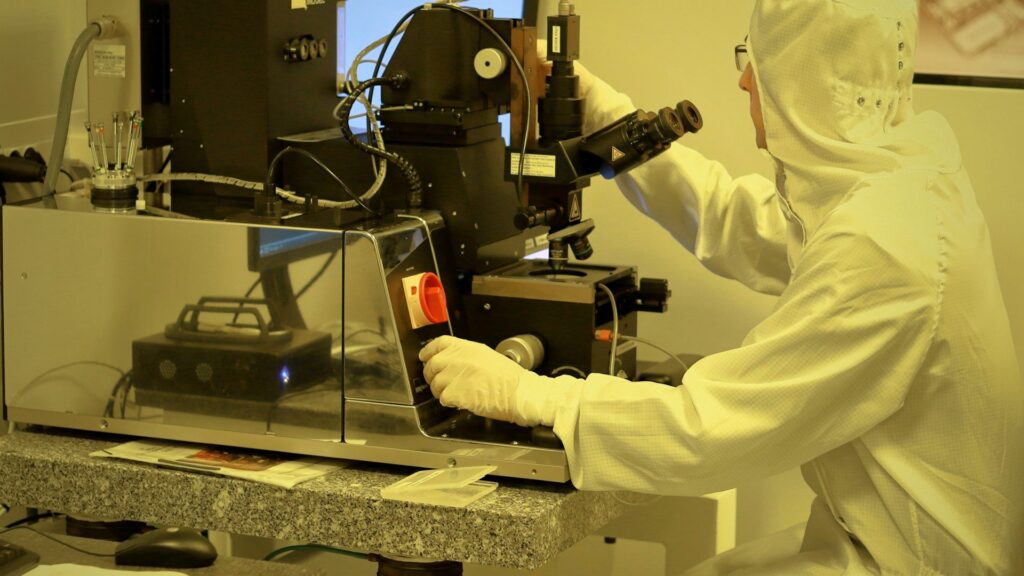
Ask who tests the parts and whether the lab is accredited. An ISO 17025 distributor medical device buyers can rely on has a lab whose methods and results are independently assessed. Common tests include:
- External visual inspection under magnification
- X-ray to compare die and bond wires against a known good part
- XRF to check lead finish and material composition, including RoHS checks
- Decapsulation for die markings on high-risk parts
- Electrical testing against datasheet parameters
Request a sample test report. A good one has photos, the method used, the sample size and a clear pass or fail result.
3. Traceability
For each lot, the supplier should provide a certificate of conformance, the original manufacturer’s labels where available, date and lot codes, and an explanation of where the stock came from. Where full traceability to the manufacturer is not possible, testing has to carry more of the weight, and your risk assessment should say so.
4. Handling and storage
Ask about moisture sensitivity controls, dry packing, storage conditions and shelf life rules for older stock. Parts that sat in a humid warehouse for years can fail at reflow even if they are genuine. Ask whether moisture-sensitive stock is baked and dry-packed before it ships, and get the date it was last sealed.
5. Counterfeit reporting
Ask whether the supplier reports suspect parts to industry databases and how it quarantines them. GIDEP membership is one sign that a distributor takes part in industry-wide reporting.
How Much Testing Does Each Part Class Need?
Matching test depth to risk keeps costs sensible. A simple three-tier model works for most electronic component supplier qualification medical device procedures:
- Tier 1, low risk: active parts bought from the manufacturer or a franchised distributor. Standard receiving inspection and a certificate of conformance are usually enough.
- Tier 2, medium risk: open-market passives and simple logic parts with full traceability. Add external visual inspection, X-ray on a sample and XRF for lead finish.
- Tier 3, high risk: obsolete processors, memory, FPGAs and analog parts in safety-critical circuits, or any lot with broken traceability. Add decapsulation on a sample and electrical testing against the datasheet.
Write the tiers into your purchasing procedure so buyers do not have to make the call under pressure. Then the supplier knows exactly what to quote, and your auditor can see that the test level was set by a written rule.
What Should a Certified Component Supplier Medical OEM Buyers Approve Look Like?
Beyond paperwork, a certified component supplier medical OEM teams can depend on will show a few habits in practice:
- It tells you when it cannot find traceable stock instead of quietly shipping parts of unknown origin.
- It quotes test options up front, with cost and lead time, so you can match the test level to the risk of the part.
- It responds fast. Line-down situations need a quote in hours. Vyrian quotes within 24 hours.
- It accepts your purchase order terms, including flow-down of quality clauses and the right to audit.
- It offers terms that fit procurement cycles. Vyrian offers 60-day payment terms to qualified buyers.
You can see how Vyrian approaches each of these on our quality and compliance page.
How to Run Electronic Component Supplier Qualification Medical Device Reviews Step by Step
Here is a sequence that works for most electronic component supplier qualification medical device reviews, from first contact to approval.
- Classify the purchase. Is the part active and available from a franchised source, or obsolete and open market? Is it in a safety-critical circuit?
- Send a supplier questionnaire covering the five areas above.
- Review the evidence. Certificates, sample test reports, a sample certificate of conformance, and the supplier’s counterfeit procedure.
- Audit if the risk calls for it. A remote or on-site audit of the test lab and warehouse for high-risk suppliers.
- Approve with conditions. Define the test level required per part class in your purchasing documents.
- Monitor. Track deliveries, rejects and corrective actions, and re-evaluate at least yearly.
Aerospace buyers have done this for years under approved vendor list rules. Our post on aerospace approved vendor lists and independent distributors shows how that model works, and much of it transfers directly to medtech.
Common Mistakes in Electronic Component Supplier Qualification Medical Device Programs
These are the gaps we see most often when buyers share their electronic component supplier qualification medical device files with us:
- Emergency approvals that never get closed out. A one-time buy during a line-down event becomes a supplier you use for years without a proper file.
- Accepting a certificate of conformance as proof. A CoC is the supplier’s statement and tests nothing. Pair it with inspection results for open-market parts.
- One test level for everything. Full electrical testing on every passive part wastes money. Visual inspection alone on an obsolete processor is not enough.
- Ignoring storage history. Genuine parts can still be damaged by poor storage.
For a hands-on inspection guide, see how to identify counterfeit electronic components.
“The medical buyers who move fastest are the ones who qualified us before they needed us. When a line goes down, they already have our certificates and sample reports on file, so the purchase order goes out the same day instead of after a two-week review.”
Sath Sivasothy, VP of Sales, Vyrian
Conclusion
Good electronic component supplier qualification medical device programs are risk-based. Franchised sources need a standard review. Independent distributors need evidence of certifications, accredited testing, traceability, handling controls and counterfeit reporting. Document the criteria, collect the evidence, approve with clear test requirements, and keep monitoring. Do that work before a shortage hits, and an urgent buy becomes a routine purchase order.
Ready to add a tested, certified source to your approved supplier list? Contact Vyrian for our certificates, sample test reports and a quote. You can also search component availability or browse by manufacturer.
About the Author
Sath Sivasothy is VP of Sales at Vyrian Inc., a Houston-based independent distributor of obsolete, end-of-life and hard-to-find electronic components. He works with supply chain and quality teams in medical, aerospace and defense markets on sourcing parts that need full testing and documentation. Connect on LinkedIn.
Frequently Asked Questions
Can a medical device OEM buy from an independent distributor?
Yes, if the distributor is evaluated and approved under your purchasing procedure. Most OEMs require enhanced testing and traceability for open-market parts.
What is an ISO 17025 distributor medical device buyers should look for?
A distributor whose test lab holds ISO/IEC 17025 accreditation, meaning its test methods and results have been independently assessed.
How often should electronics suppliers be re-evaluated?
At least once a year, and after any quality escape, ownership change or change of test lab.
Is a certificate of conformance enough for open-market parts?
No. A certificate of conformance should be backed by inspection and test results matched to the risk of the part.