
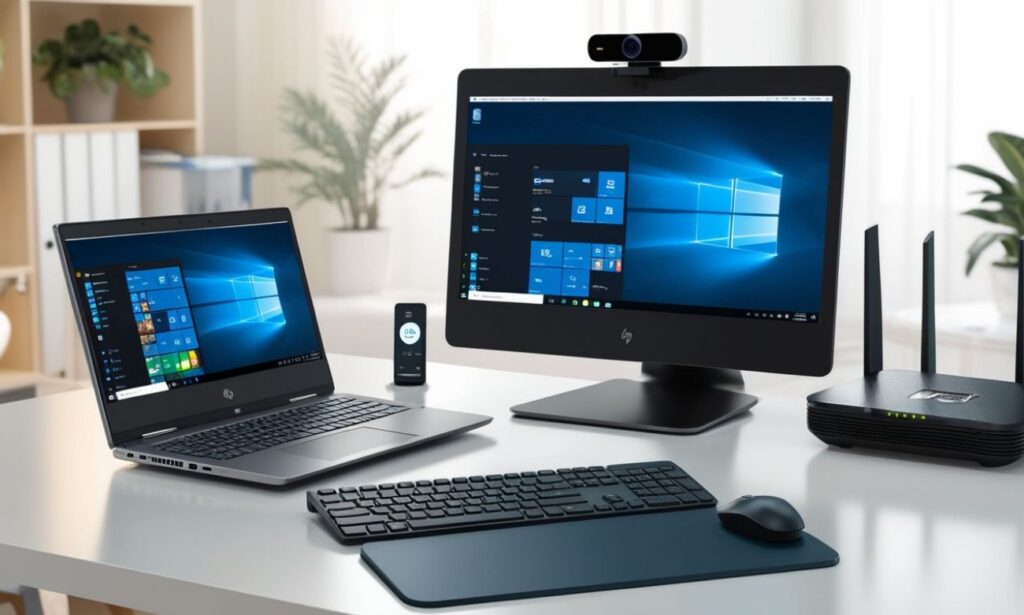
The rapid shift to remote work has fundamentally transformed the IT hardware landscape, compelling organizations to adopt innovative solutions that support a distributed workforce. According to Gartner, through 2024, organizations will be forced to accelerate digital business transformation plans to adapt to a post-COVID-19 world that involves permanently higher adoption of remote work and digital touchpoints.
1. High-Performance Laptops and Mobile Workstations
The demand for robust, portable computing devices has surged, with IT hardware accounting for $705.4 billion in spend for 2021.
Manufacturers are responding by developing laptops and mobile workstations equipped with advanced processors and enhanced battery life, ensuring seamless performance for remote professionals.
2. Enhanced Connectivity Solutions
Reliable internet connectivity is paramount for remote operations. The adoption of 5G technology and advanced Wi-Fi 6 routers has been instrumental in providing high-speed, stable connections, facilitating uninterrupted virtual meetings and cloud-based collaborations.
3. Secure Remote Access and Data Protection
With the increase in remote work, cybersecurity has become a critical concern. Organizations are investing in Virtual Private Networks (VPNs) and multi-factor authentication (MFA) to safeguard sensitive information. The global cybersecurity market is projected to grow from $217.9 billion in 2021 to $345.4 billion by 2026, reflecting the heightened focus on data security.
4. Collaboration Tools and Peripheral Devices
To enhance virtual collaboration, companies are equipping their teams with high-quality webcams, noise-canceling headphones, and ergonomic peripherals. The global market for video conferencing hardware is expected to reach $9.2 billion by 2026, indicating a sustained investment in tools that bridge the physical gap between remote workers.
5. Sustainable and Energy-Efficient Hardware
Sustainability is increasingly influencing hardware procurement decisions. Manufacturers are introducing energy-efficient devices and utilizing recyclable materials, aligning with corporate social responsibility goals and reducing operational costs.
Supporting Remote Team Efficiency Through Strategic Outsourcing
In a distributed work environment, companies often turn to strategic outsourcing to maintain efficiency and flexibility. This approach is particularly effective in areas like digital marketing, where remote teams may need specialized support to manage tasks. For instance, some organizations partner with an SEO outsourcing company in India to strengthen their digital presence without overburdening internal resources.
Beyond marketing, industries such as BPOs, software development, human resources, and finance are thriving within the remote work model. These sectors also rely on robust IT hardware to ensure their teams can seamlessly carry out day-to-day operations. By leveraging external expertise, companies can keep their efforts agile and adaptable, allowing them to meet shifting market demands and remain competitive.
Conclusion
The evolution of IT hardware is pivotal in supporting the distributed workforce. By investing in advanced, secure, and sustainable hardware solutions, organizations can ensure productivity and collaboration in a remote work setting. Additionally, strategic outsourcing of functions can further bolster a company’s competitive edge in the digital marketplace.