In the fast-paced world of electronic components, capacitors play a vital role in various applications, from consumer electronics to industrial systems. Whether you’re working on prototyping, manufacturing, or maintenance, sourcing the right capacitors is essential to ensure your project’s success. With so many capacitors for sale online, how do you identify the best supplier and guarantee that the capacitors meet your specific requirements?
In this guide, we’ll take you through the key factors you need to consider when buying capacitors online, from supplier reputation to compliance. You’ll also discover a variety of capacitor types that are commonly used across various industries and applications, including fixed capacitors, capacitor arrays, and trimmer & variable capacitors.
As a trusted supplier, Vyrian streamlines capacitor sourcing by offering a wide variety of options and providing insights to help buyers make informed decisions. Our goal is to make the procurement process easier, ensuring you get the right components for your specific needs.
Types of Capacitors and Their Applications
Capacitors come in various forms, each suited to different applications. Understanding the characteristics and purposes of these capacitor types can help you make the right choice for your project.
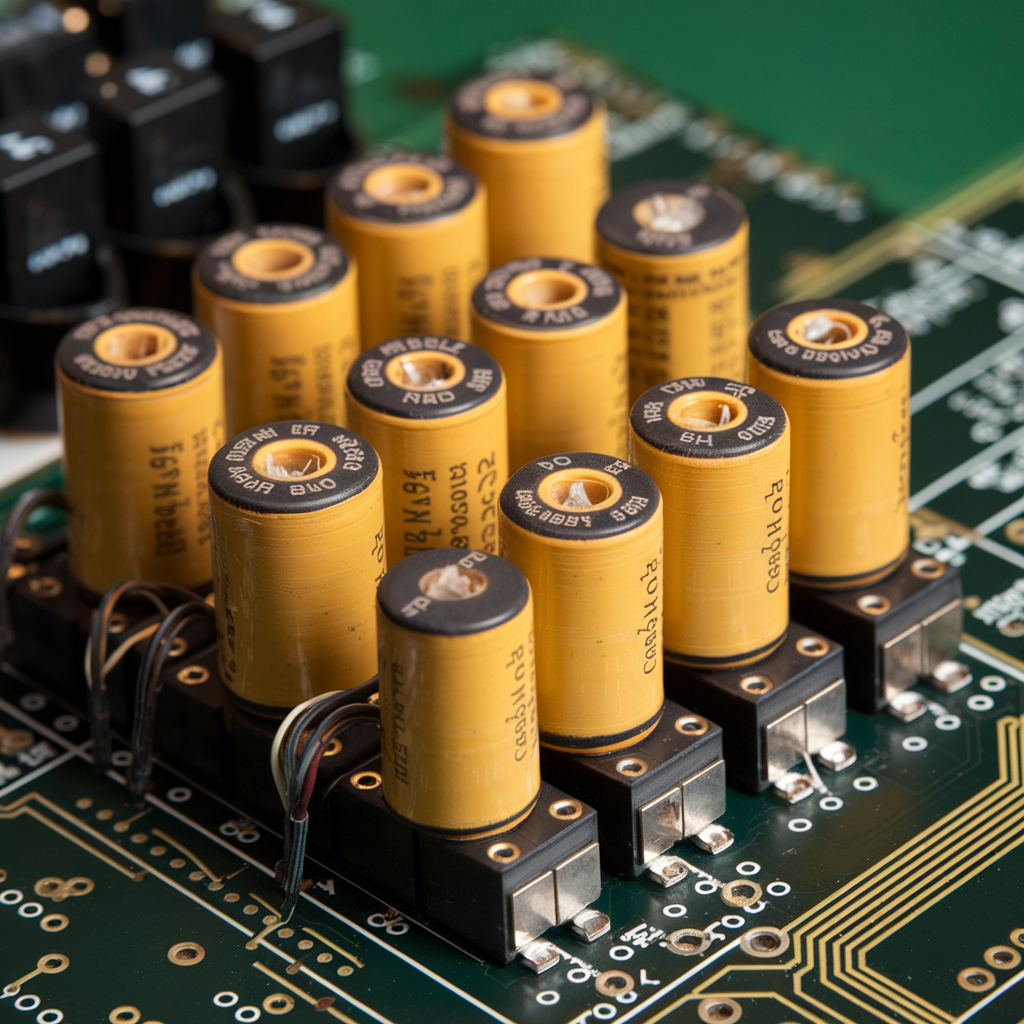
- Fixed Capacitors: These are among the most common types of capacitors and are used in applications requiring a constant capacitance value. They are ideal for power supply circuits, filtering, and decoupling tasks.
- Capacitor Arrays & Networks: These are designed for space-saving and multi-functionality, combining multiple capacitors into a single package. They’re widely used in compact circuit designs and high-density applications such as telecommunications and computing systems.
- Other Function Capacitors: These capacitors serve more specialized roles in electronic systems, such as energy storage or timing applications. They may include configurations for unique industrial purposes or custom-designed circuits.
- Special Function Capacitors: These capacitors are engineered for niche applications, such as specific frequency filtering or customized power handling. You might find them in highly specialized fields such as aerospace, defense, and medical equipment.
- Trimmer & Variable Capacitors: These are adjustable capacitors, typically used in tuning circuits like radio frequency (RF) systems, allowing users to modify capacitance to meet specific operating conditions. These capacitors are ideal for applications where fine adjustments are needed.
Each of these capacitor types offers distinct advantages depending on the specific application, from general-purpose usage to specialized, high-performance needs.
Where to Buy Capacitors Online?
When buying capacitors online, several factors will influence your decision. The goal is to find a supplier who provides high-quality components while meeting your project’s technical requirements.
Here are some key points to keep in mind:
1. Supplier Reputation
When sourcing components, a supplier’s reputation is one of the most important factors to consider. Choose suppliers with a proven track record for delivering quality components. Look for:
- Customer reviews
- Certifications like ISO or RoHS compliance
- Longevity and industry standing
Reliable suppliers like Vyrian offer capacitors for sale with full quality assurance, ensuring that all components are tested and meet industry standards. Read more here about Vyrian’s quality compliance, advanced part testing, and key certifications.
2. Inventory Availability
A good supplier should provide a comprehensive range of capacitors, whether you need general-purpose ones like fixed capacitors or more specialized parts like capacitor arrays and networks. Ensuring that your supplier has a broad inventory reduces delays and ensures that the components you need are readily available.
3. Pricing and Bulk Discounts
Whether you’re working on a small project or sourcing for large-scale production, cost is always a factor. Suppliers often offer bulk order discounts. However, make sure you aren’t sacrificing quality for a lower price. Reliable suppliers will strike the perfect balance between cost and quality, offering capacitors at competitive prices.
4. Technical Support and Data Sheets
To avoid potential mismatches or component failures, ensure the supplier provides detailed technical support and data sheets for each capacitor. This is especially important when selecting more specialized components like trimmers & variable capacitors. Having access to comprehensive documentation allows you to make well-informed decisions about the capacitors you need.
5. Compliance with Industry Standards
Many industries, especially in the healthcare and automotive sectors, have strict compliance requirements such as RoHS and REACH. It’s important to verify that the capacitors you purchase meet these regulatory standards. Sourcing from a trusted supplier like Vyrian ensures that you’re receiving certified, high-quality components that meet all necessary industry guidelines.
Key Technical Specifications to Consider When Buying Capacitors
Selecting capacitors based on their technical specifications ensures optimal performance and reliability. Here are the most important technical specs to keep in mind:
1. Capacitance (Farads)
- What it is: The measure of a capacitor’s ability to store charge, measured in Farads (F), typically in microfarads (µF), nanofarads (nF), or picofarads (pF).
- Why it matters: Matching capacitance with your circuit’s requirements is crucial for performance. For example, power supplies need higher capacitance, while signal filtering may need lower capacitance.
2. Voltage Rating
- What it is: The maximum voltage a capacitor can safely handle before it breaks down.
- Why it matters: Always select a capacitor with a voltage rating higher than your circuit’s operating voltage to ensure reliability.
3. Tolerance
- What it is: The allowed variation in capacitance from the labeled value, expressed as a percentage (e.g., ±10% or ±20%).
- Why it matters: Lower tolerance is needed in precision applications like oscillators, while higher tolerance may be acceptable in general applications.
4. Equivalent Series Resistance (ESR)
- What it is: The internal resistance of the capacitor affects its efficiency in high-frequency or high-current applications.
- Why it matters: Low ESR is critical for power supplies and high-current circuits to minimize losses and heat generation.
5. Temperature Coefficient
- What it is: How much a capacitor’s capacitance changes with temperature.
- Why it matters: Applications exposed to varying temperatures, such as automotive systems, need capacitors with stable temperature coefficients.
6. Operating Temperature Range
- What it is: The range of temperatures within which the capacitor can safely operate.
- Why it matters: In harsh environments like industrial systems or automotive electronics, capacitors must function reliably over wide temperature ranges.
7. Dielectric Type
- What it is: The material used in the capacitor’s dielectric (ceramic, electrolytic, tantalum, etc.), which affects performance.
- Why it matters: Different dielectric materials suit different applications, such as ceramic capacitors for high-frequency circuits or electrolytic capacitors for large capacitance needs.
8. Leakage Current
- What it is: The small amount of current that flows through the dielectric when a capacitor is charged.
- Why it matters: In precision circuits, capacitors with low leakage current are preferred.
9. Physical Size and Mounting Type
- What it is: The physical size and whether the capacitor is through-hole or surface-mount.
- Why it matters: Ensure the capacitor fits the space available on your PCB.
10. Lifespan and Reliability
- What it is: The expected operational life of the capacitor.
- Why it matters: In mission-critical applications, long-life capacitors with proven reliability are essential.
11. Ripple Current
- What it is: The alternating current (AC) that flows through a capacitor in power supply circuits.
- Why it matters: Capacitors with higher ripple current ratings are crucial in switching power supplies to avoid overheating.
Why Vyrian is a Trusted Choice for Capacitor Sourcing
When looking for a supplier that checks all the boxes—reputation, inventory, pricing, and technical support—Vyrian is a solid option. With a global network and extensive inventory that includes hard-to-find and obsolete components, Vyrian ensures that engineers and procurement specialists have access to the capacitors and other electronic components they need, whether for everyday use or specialized industrial applications. From fixed capacitors to general-purpose components, Vyrian provides quality, reliability, and timely delivery to keep your projects running smoothly.