TL;DR
- 2A0X1 is the US Air Force specialty code for Avionics Test Station and Components. The X stands for the skill level.
- These airmen work in the avionics backshop, testing and repairing aircraft electronics removed from the flight line.
- Their work isolates failures in radar, electronic warfare and flight control electronics down to the component level.
- Many test stations and the boxes they test use parts that have been out of production for years.
- Keeping that equipment running depends on sourcing obsolete electronic components with full traceability.
- Request a Quote
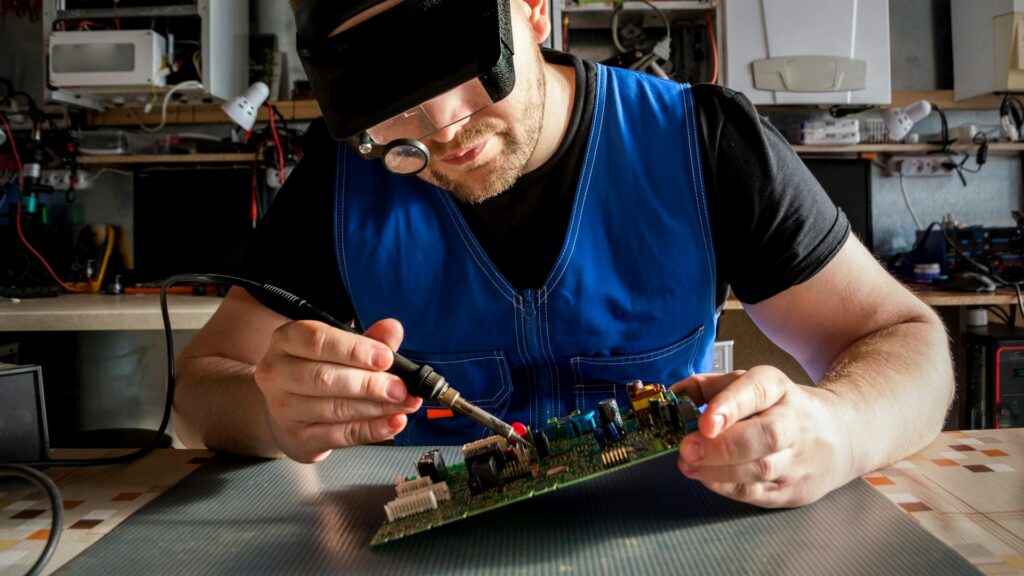
2A0X1 is the Air Force Specialty Code (AFSC) for Avionics Test Station and Components, the enlisted career field that tests and repairs aircraft electronics after they come off the jet. If an avionics box fails on the flight line, it gets swapped and sent to the backshop. There, a 2A0X1 airman hooks it to a test station, finds the fault and gets it ready to fly again.
This guide explains what the code means, what the job involves, how training works, and why the career field matters to anyone who buys or supports military avionics. It also covers the part most people miss: the test stations themselves are aging electronics, and they need parts too.
What Does 2A0X1 Mean?
Air Force enlisted specialty codes follow a pattern. In 2A0X1:
- 2 is the logistics and maintenance career group.
- 2A covers aircraft maintenance.
- 2A0 is the avionics family.
- X is a placeholder for the skill level.
- 1 identifies this specific specialty.
Replace the X with a skill level and you get the codes used for individual airmen. The current career field education and training plan lists 2A011 (helper), 2A031 (apprentice), 2A051 (journeyman) and 2A071 (craftsman). At the senior master sergeant level, the specialty merges into 2A090, the avionics superintendent code.
The official title has changed over time. The September 2025 training plan uses “Avionics Test Station, Components, and Electronic Warfare Systems,” which reflects how much electronic warfare work now sits inside this career field.
You will see the code in enlistment listings, veteran resumes and some contractor job postings for backshop and test equipment roles. When a posting asks for this background, it usually means hands-on experience with automatic test equipment, technical orders and component-level troubleshooting.
What Are the Core AFSC 2A0X1 Duties?
The Air Force’s avionics test station and components career page describes the job in practical terms. AFSC 2A0X1 duties include:
- Fault isolation. Tracing electronic, radar and electronic warfare failures down to the component level.
- Running test stations. Programming and operating computerized test stations that run simulation diagnostics on flight control computers.
- Calibration. Calibrating laser, infrared and weapon-targeting sensor systems.
- Repair. Replacing failed modules, circuit cards and components so the unit passes test.
- Test equipment upkeep. Maintaining the test stations themselves, which are complex electronic systems in their own right.
In maintenance terms, the work centers on line replaceable units (LRUs), the boxes pulled off the aircraft, and shop replaceable units (SRUs), the circuit cards and modules inside them. The specialist uses the test station to find which SRU failed, replaces it, and retests the LRU.
How Does an Avionics Test Station Specialist USAF Airman Get Trained?
An avionics test station specialist USAF recruit follows this path, according to the Air Force career page:
- Basic Military Training: 7.5 weeks.
- Technical training: 73 to 90 days at Sheppard Air Force Base, Texas.
- College credit: credits toward an associate degree in Avionics Systems Technology.
Training covers electronic principles, test equipment operation, technical data and safety before airmen ever touch a live system. After technical school, airmen enter upgrade training at their first base. They move from apprentice to journeyman to craftsman through on-the-job training, career development courses and time in the job. Much of the real learning happens on the specific test stations and aircraft systems at that base.
What Does a Typical Backshop Repair Look Like?
The exact steps depend on the aircraft and the test station, but most avionics backshop repairs follow the same basic flow:
- Receive and log the LRU. The failed box arrives from the flight line with a description of the fault the aircrew or crew chief saw.
- Connect it to the test station. An interface adapter links the box to the station, which supplies power and simulates the signals the aircraft would send.
- Run the test program. The station steps through a programmed sequence and flags which tests fail.
- Isolate the fault. The technician follows the test results and diagnostic procedures to the failed SRU, and sometimes to a single component on that card.
- Repair or replace. The failed SRU is swapped from stock, or sent for repair if the shop is authorized to work at that level.
- Retest and return. The LRU runs the full test again. If it passes, it goes back to supply as a serviceable spare.
Two things can stall this flow: a test station that is itself down, and a replacement SRU or component that is not available. Both problems often trace back to parts that are no longer made.
Where Does 2A0X1 Fit in Aircraft Readiness?
Aircraft readiness depends on spares. When an avionics box fails, the flight line pulls it and installs a serviceable spare so the jet can fly. The failed box goes to the backshop. If the backshop team can repair it quickly, it goes back on the shelf as a ready spare.
If the backshop cannot repair it, the box goes to a depot or the manufacturer, which takes longer. If spares run out while those repairs wait, aircraft sit on the ground. Our post on AOG and electronic component obsolescence covers how quickly that chain breaks.
Speed matters at every step. When a shop is waiting on one part, a quote that takes a week costs a week of repairs. Vyrian answers part requests within 24 hours so supply teams can decide quickly whether to buy, wait or look for an alternative.
That makes the backshop a critical link. A fast, capable backshop keeps spares flowing and keeps aircraft mission capable.
Why 2A0X1 Electronic Components Are Hard to Replace
The career field deals with this problem every day. Many military aircraft fly for decades. Their avionics were designed around chips that were current when the aircraft entered service. The test stations used to repair those avionics were also built years ago, often from commercial and military-grade parts that have since gone end of life.
That creates two layers of obsolescence for 2A0X1 electronic components:
- Inside the aircraft boxes: processors, memory, FPGAs, analog parts and connectors on the SRUs.
- Inside the test stations: instrument cards, power supplies, switching matrices, interface adapters and the computers that run the test programs.
When a test station goes down, every LRU that depends on it stops moving through the shop. So avionics support equipment military units rely on has to be sustained just like the aircraft. Both layers are managed under diminishing manufacturing sources and material shortages (DMSMS) programs. Our DMSMS management plan guide explains how sustainment teams track these risks.
How Are Parts for Avionics Backshops Sourced?
When the original manufacturer no longer makes a part, sustainment and supply teams have a few options:
- Government stock through the supply system, if any remains.
- The original equipment maker, which may hold a lifetime buy or offer a redesign.
- Authorized aftermarket manufacturers that produce licensed copies of discontinued chips.
- Independent distributors that search excess and surplus stock worldwide, with inspection, testing and authentication.
- Form-fit-function replacements when no original stock exists. See our guide to form-fit-function replacement in defense electronics.
For military work, open-market parts must come with counterfeit controls. Vyrian holds AS9120B, AS6081 and ANSI/ESD S20.20 certifications, runs an ISO/IEC 17025 certified engineering lab with X-ray, XRF and counterfeit IC detection, and is a GIDEP member. Details are on our quality and compliance page.
What 2A0X1 Experience Means After the Air Force
Veterans leaving this career field bring skills that transfer well to defense contractors, MRO providers and test equipment makers. Common next roles include avionics technician, test engineer, field service engineer and sustainment or obsolescence analyst.
The obsolescence side is worth a closer look. A former backshop airman already knows which SRUs fail, which test station parts are hard to find, and what a missing part does to a repair schedule. That makes them valuable in procurement and supply chain roles where the job is finding hard-to-get parts before they stop a program.
“Some of our most precise part requests come from people who worked avionics backshops. They know the exact card, the exact chip and why it matters. When a test station is down, they understand that a single part is holding up a whole queue of repairs, and they want it found and verified fast.”
Sath Sivasothy, VP of Sales, Vyrian
Conclusion
2A0X1 is the Air Force career field that tests and repairs aircraft electronics in the backshop. Its airmen isolate failures to the component level, run and maintain complex test stations, and keep avionics spares flowing so aircraft can fly. Both the aircraft boxes and the test stations rely on electronic parts that are often out of production, which puts obsolete component sourcing on the critical path for military readiness.
Supporting avionics or test equipment with discontinued parts? Contact Vyrian for avionics component sourcing support. You can also search component availability or browse by manufacturer.
About the Author
Sath Sivasothy is VP of Sales at Vyrian Inc., a Houston-based independent distributor of obsolete, end-of-life and hard-to-find electronic components. He works with defense contractors, MRO teams and sustainment engineers who need traceable parts for legacy avionics and test equipment. Connect on LinkedIn.
Frequently Asked Questions
What does the X in 2A0X1 stand for?
The X is a placeholder for skill level. It becomes 1, 3, 5 or 7 for helper, apprentice, journeyman and craftsman.
Where is 2A0X1 technical school?
The Air Force career page lists technical training at Sheppard Air Force Base, Texas, lasting 73 to 90 days.
What equipment does a 2A0X1 specialist work on?
Computerized avionics test stations and the aircraft electronics they test, including radar, electronic warfare, flight control and targeting systems.
Why is 2A0X1 relevant to electronic component sourcing?
Both the avionics they repair and the test stations they use contain parts that are often obsolete. Keeping them working depends on finding traceable replacement parts.